
We now enter a trade war with Canada. A trade war is usually defined (Here, by Grok) as “a sustained conflict between two or more countries involving the deliberate use of economic measures… to restrict or manipulate the flow of goods across borders.” The definition goes on to note it usually plays out as tariffs imposed to “protect domestic industries… [address] unfair practices, or economic leverage.” But in the immediate case, the “war” began when President Donald Trump unilaterally (Without Congressional action) imposed 25% tariffs on “all” Canadian exports based on vague accusations about fentanyl and trafficking – demanding Canada do more, without specific goals. Furthermore, as matters escalate, normal trade patterns are interrupted resulting in increased costs for consumers, are most often tied to specific policy changes or concessions” – usually policies directly tied to the export in question – Government subsidized lumber being a classic. As said, there are no specifics here.
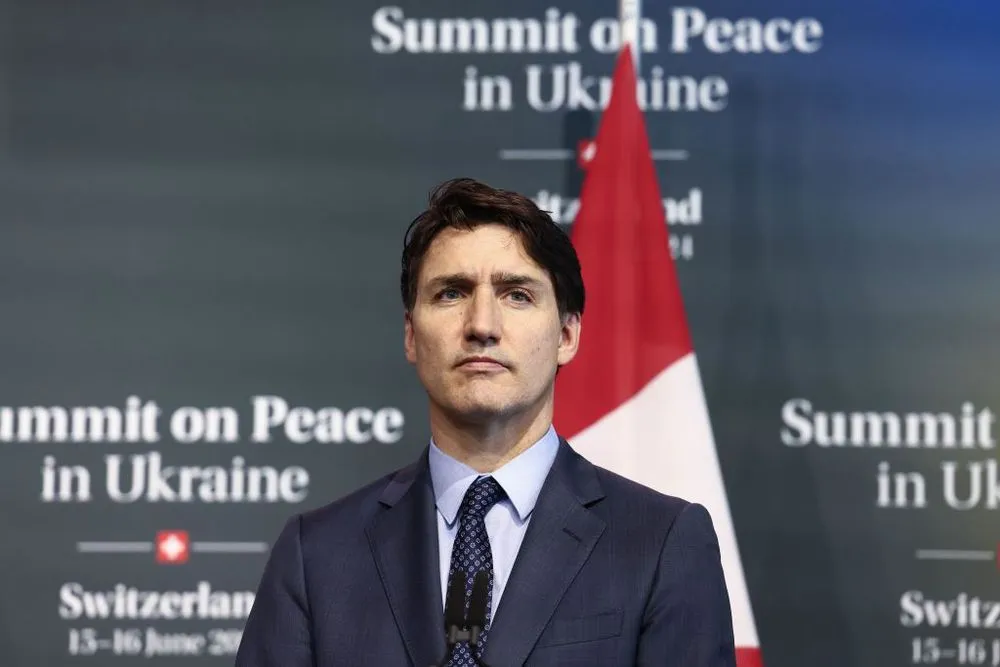
Thus it is that – as literally everyone expected, Canada will now retaliate against American practices in a manner sure to hurt U.S. consumers, businesses, particularly American farmers who are already vulnerable due to tariffs on China. Mediaite reports on Canadian Prime Minister Trudeau’s announcement:
“Canada will not let this unjustified decision go unanswered. Should American tariffs come into effect tonight, Canada will, effective 12:01 a.m. EST tomorrow, respond with 25 percent tariffs against $155 billion of American goods – starting with tariffs on $30 billion worth of goods immediately, and tariffs on the remaining $125 billion on American products in 21 days’ time.”
As of this moment, it is difficult to tell whether the $155 billion represents all Canadian exports into the United States or whether it is limited to certain products. There is a new wrinkle in that Trudeau announced that the Trump administration intends to put a 10% tariff on Canadian “energy.” Such a tariff includes impositions on Canadian oil and natural gas, but also includes electricity. Canada will reciprocate in the electricity sent down from Ontario and Quebec into what has developed as an international electric grid serving both countries. A 10% tariff in either direction increases electric bills 10% with no discernible benefit to Americans or Canadians. Price increases such as this are usually only imposed if the goal is seen as worth it in value. Fentanyl and trafficking on the border? Trudeau noted that only one percent of intercepted fentanyl comes across the Canadian-American border. Trafficking presumably goes both ways.
The fallout is easily described along with the head-shaking irony. Trump is the one who demanded the new trade agreement he will now violate. Trudeau describes the consequences:
“Because of the tariffs imposed by the U.S., Americans will pay more for groceries, gas, and cars, and potentially lose thousands of jobs. Tariffs will disrupt an incredibly successful trading relationship. They will violate the very trade agreement that was negotiated by President Trump in his last term.”
Again, if the tariffs were imposed in response to a threatening troop build-up on the border, well – that’s one thing. It is another to ask Americans “Is the situation on the Canadian border worth the cost?” (Mexico is another set of circumstances with a different calculation). Some Trump supporters might say “Yes,” with the presumption that the tariffs somehow benefit them. It is hard to envision a scenario in which they do.
The ultimate “cost” goes beyond the 25% increase in prices on Canadian goods or 10% in power. Economics and international trade is non-linear. There is a spillover effect into other exports/imports from other countries picking up slack or opportunity which is near impossible to predict. The only given is the increase in prices to citizens on an even broader context with even more unpredictability to the global economy.
In an ideal world these tariffs would at least protect American domestic producers. We don’t live in that world. For better or worse, “free trade” has brought efficiencies in prices with parallel consumer expectations. We are now in a situation where prices will increase across the board. For what? Protection of U.S. domestic industries? What has changed since 2018 and Trump’s preferred conditions then? Even Trump doesn’t claim that these increases protect domestic industries. This appears to be only a protest about a border that somehow wasn’t a problem just four years ago. Weird. Almost like there is a wholly unstated agenda, someone wanting to do little more than destabilize a relationship between long cherished allies. Who could possibly benefit from that?
Puzzling.
God Bless: I can be reached at [email protected] and on twitter-X at @JasonMiciak, and follow now on Bluesky.
Friends, we are struggling to make ends meet. It’s not just us, it’s industry wide. There are star hosts being bumped on MSNBC as we speak. (Joy Reid and Alex Wagner) So if you can afford a small donation or a monthly subscription, it would be greatly appreciated. Thank you. Ursula




















Over the shorter term, it won’t help either country because tariffs drive up local demand and where local capacity isn’t up to the task, inflation happens. But I can tell you a “buy Canadian” movement is in full swing here and locally grown and manufactured products are flying off the shelves. The upshot will be increased investment in Canadian businesses to make up for capacity shortfalls. So, over the longer term, trump’s aggression will help Canada and open up new trading relationships in Europe and the Pacific rim. I guess trump hasn’t studied the law of unintended consequences.
A spoiled 79 year old toddler doesn’t grasp much.
Convicted, felonious, rapist Trump study anything? He’s a cruel (and cruelty is the point), ignorant imbecile, totally unaware of how anything works, certainly not tariffs. The problem is that he’s too lazy to evaluate an action through Congress, like a smart president would. Executive actions are easy. He uses them because he can do them without Congressional approval, so that lazy bastard can go play golf. What an a-hole!
I’m Canadian.
Will you guys please read PROJECT2025. Stop blaming this on trump – he’s the distraction and the performance politician.
They are stealing you blind. When they stop YOUR social security, what are you going to do? After all, it is YOUR money.
Life in the golden age. Thank you stable genius.